After launch: 5 questions to ask your analytics AI
Five practical questions to ask your analytics AI after launch, with evidence-led prompts for understanding traffic, sources, pages, actions, and the next improvement.
You shipped. The Product Hunt page went live, the announcement went out, and the traffic came in — or maybe it trickled. Either way, launch day is over, and now you have a more useful job: finding out what the launch actually did, before you plan the next one.
Most people skip this part. Launch week is exhausting, and by the time the numbers settle, the moment feels past. But a launch without a review is just an expensive guess — you won't know which channel worked, which page carried the load, or which action visitors actually took.
The good news: you don't need to open a dashboard to do this. If you connected Amami — AI-native web analytics that lives inside your AI coding assistant — to your editor, the review is a conversation: you type the question, Amami's MCP server pulls the numbers from your analytics instance, and your assistant answers with the evidence attached. Set it up once and never open a dashboard again:
Getting Amami MCP into your editor takes one command: npx -y amami-analytics-mcp. Point your MCP client at it (Claude Code, Cursor, VS Code, Codex — anything that speaks MCP), authorize once in the browser, and you can ask questions in plain language right where you already work. New here? Start free at https://amami.dev.
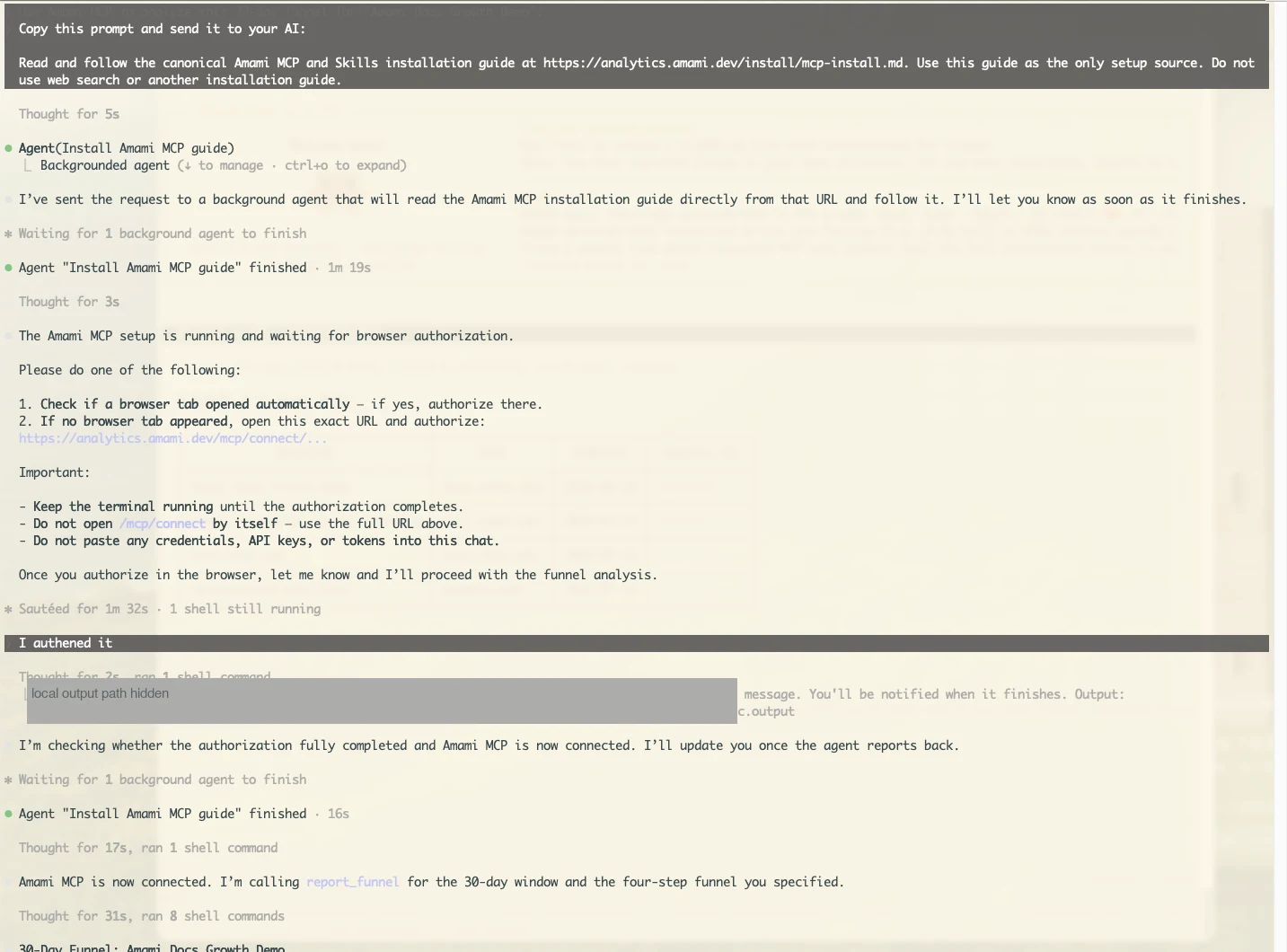
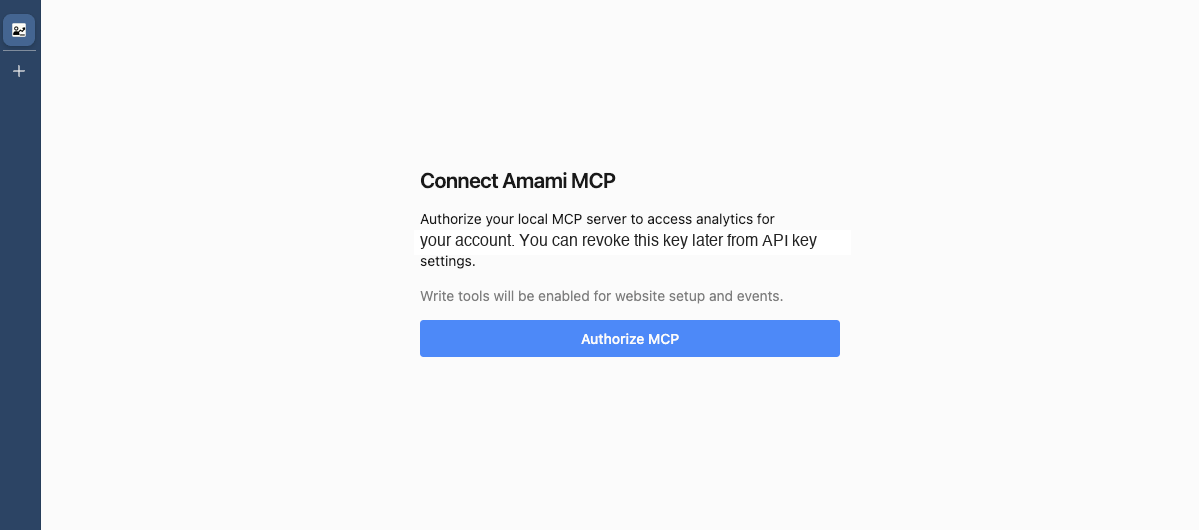
The screenshots below are real sessions: each question answered by Amami's MCP tools with live numbers.
Here are the five questions that make up a useful launch review, why each one matters, and how to ask them.
1. What changed in traffic since launch?
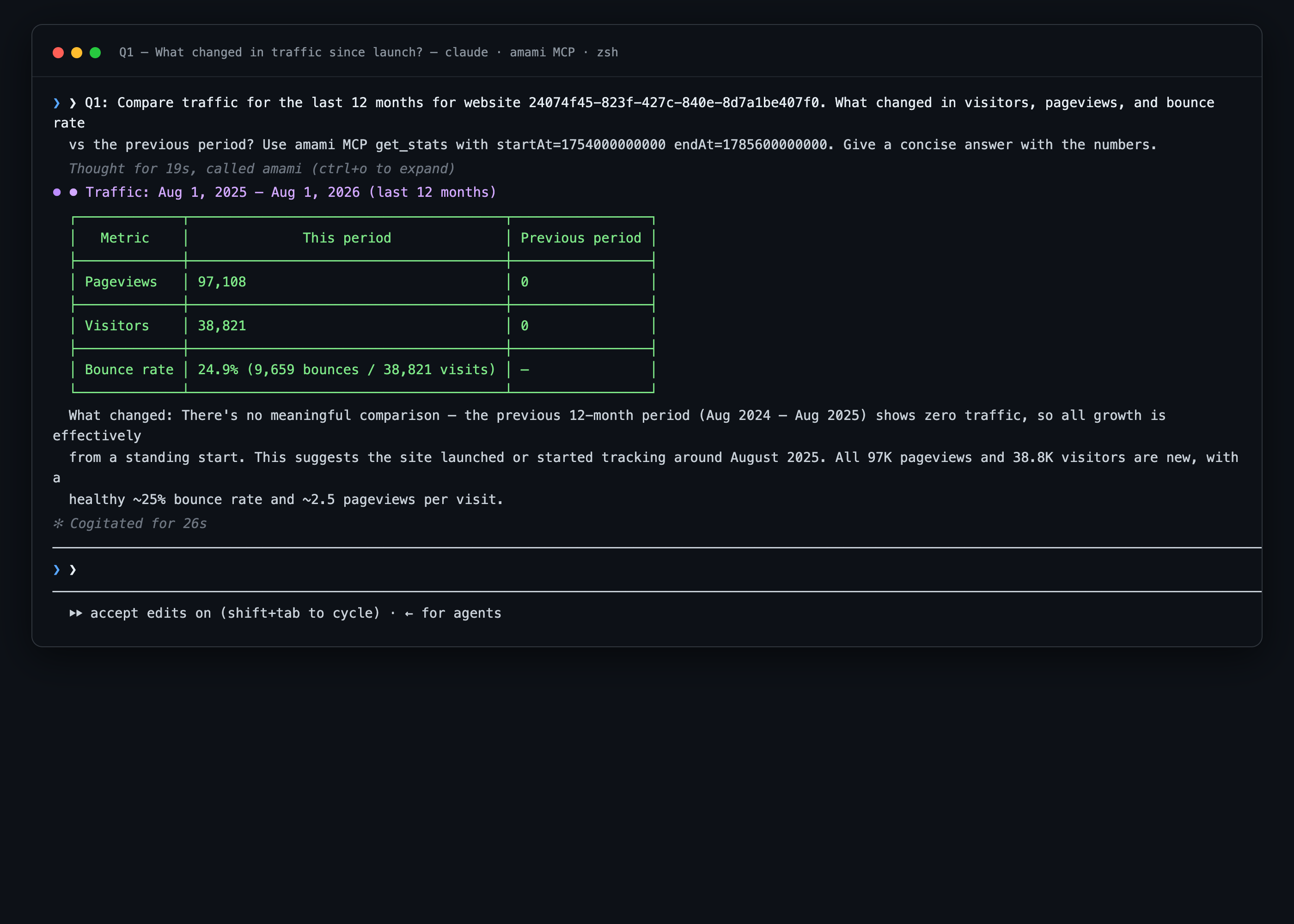
Start with the before/after. A number only means something compared to the period before.
"Compare traffic for the week of my Product Hunt launch against the week before. What changed in visitors, pageviews, and time on site?"
What you're looking for: the size of the launch effect. A spike that fades by day three is normal. A change that holds for a week is a signal worth taking seriously.
When your assistant answers, ask for the date ranges it used — the evidence is part of the answer.
2. Where did the visitors come from?
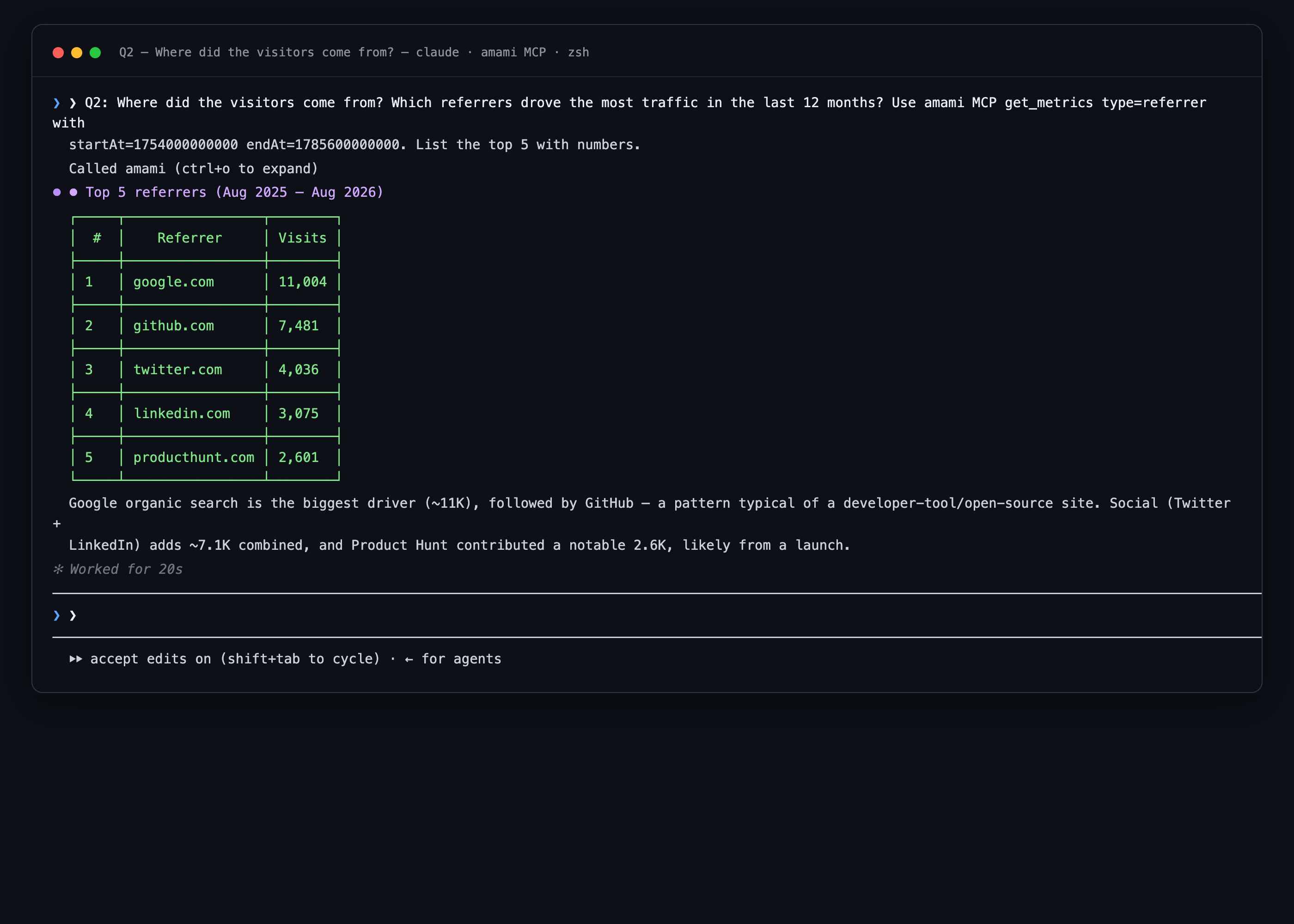
Traffic is only interesting when you know its origin. Launch sources are rarely equal in quality.
"Which referrers drove the most traffic during launch week? Which ones converted best?"
Product Hunt, X/Twitter, Hacker News, Google — each behaves differently. PH sends a burst of curious visitors who may or may not match your buyer. A small but focused referrer from a niche community can be worth ten times more.
Keep in mind: sample sizes are small in launch week. Treat channel conclusions as hypotheses, not verdicts.
3. Which page actually carried the load?
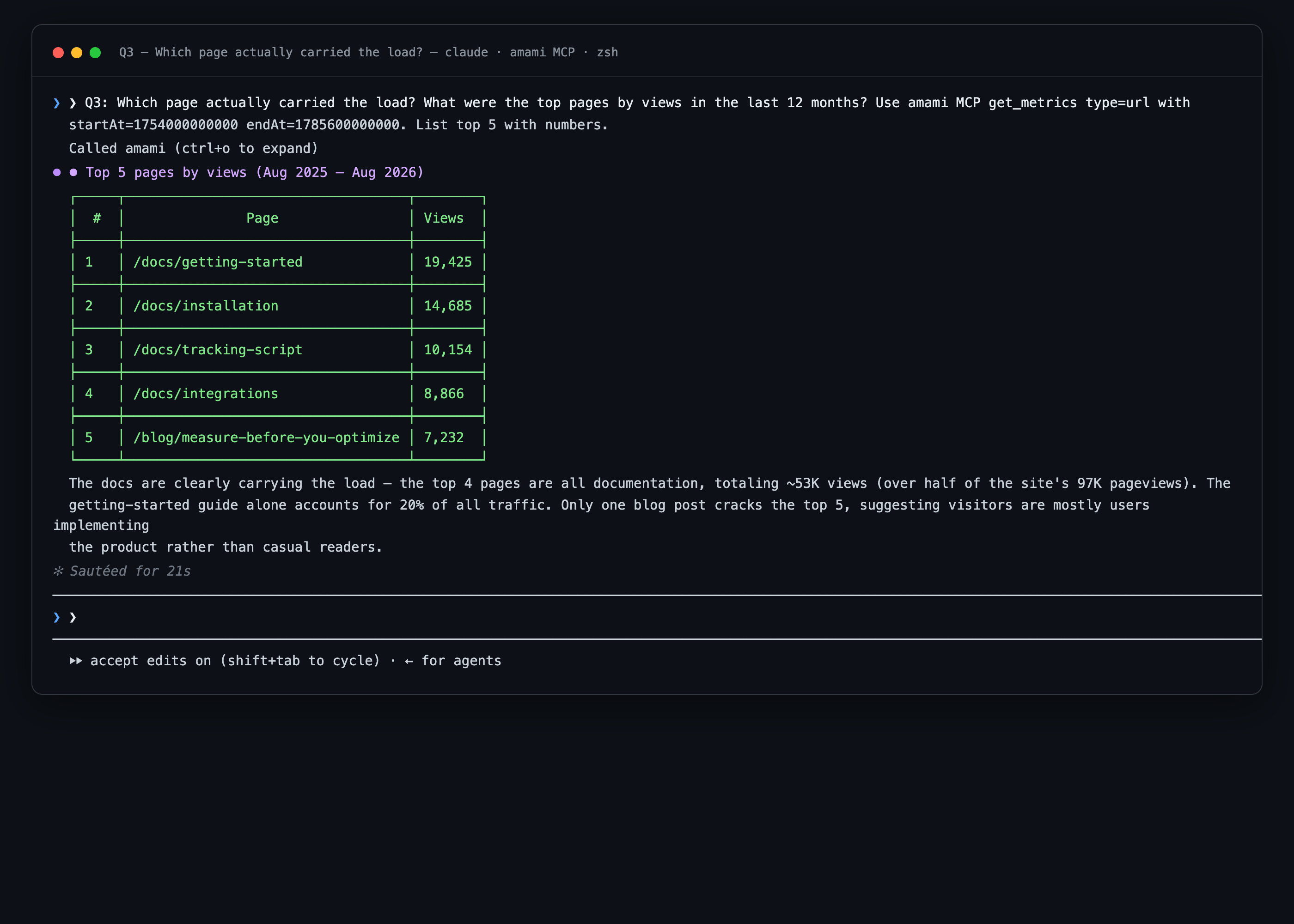
Your launch post points to one URL, but visitors end up everywhere — docs, pricing, your homepage, a random old post.
"Which pages got the most views during launch week? Did visitors reach my pricing page?"
This tells you two things: whether your launch page did its job, and whether your funnel held up. If everyone landed on your homepage but nobody made it to pricing, that's a path problem, not a traffic problem.
4. What actions did people take?
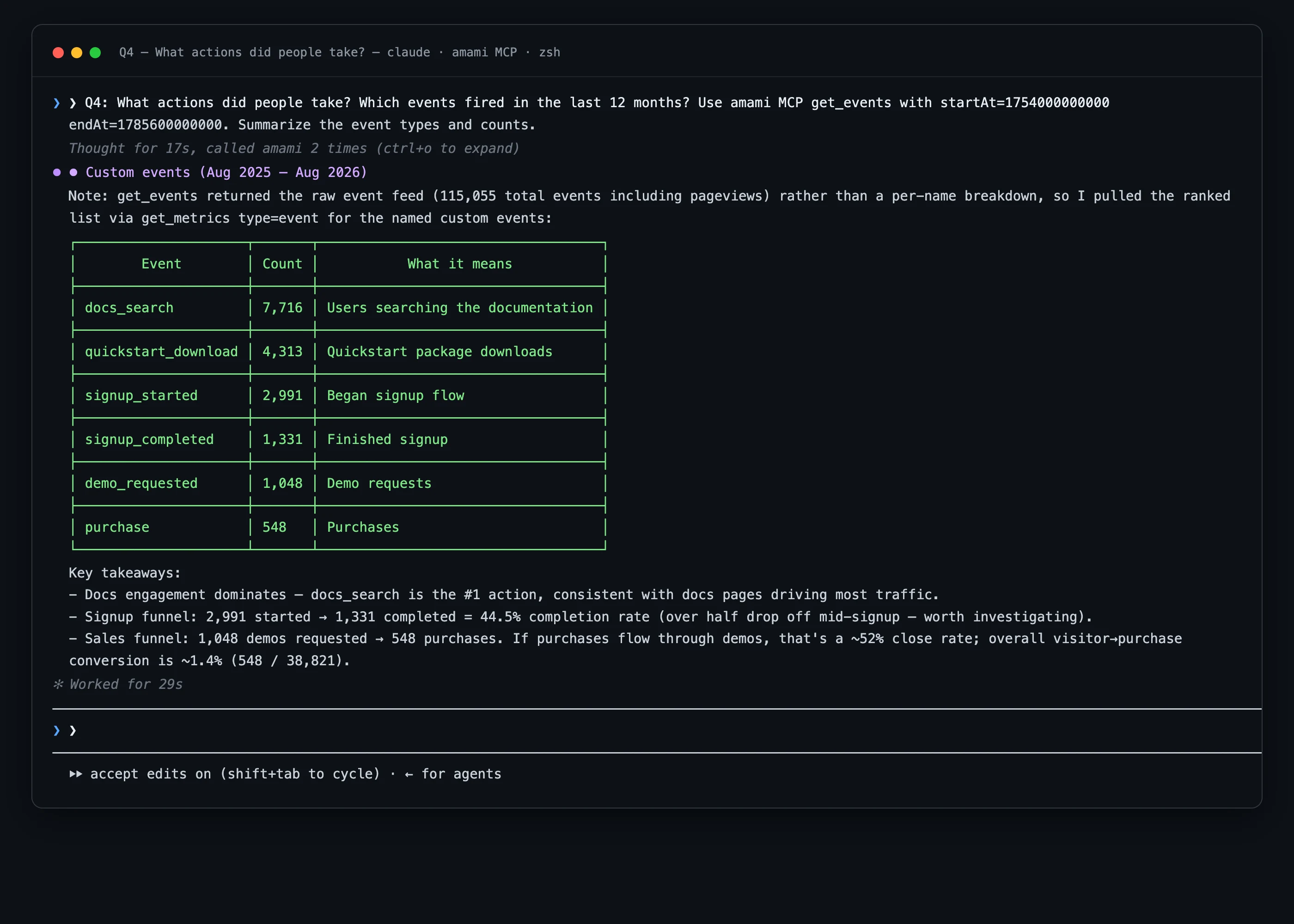
Visits don't ship products — actions do. If you set up events before launch (signup clicks, install starts, form submits), now is when they pay off.
"Which events fired during launch week? What does the path from visit to signup look like?"
One event is enough to make this question valuable. "Clicked Start" on a landing page is already a real signal. If you don't have events configured yet, add the two or three that describe the action you actually care about, then look again after the next push.
5. What should we improve next?
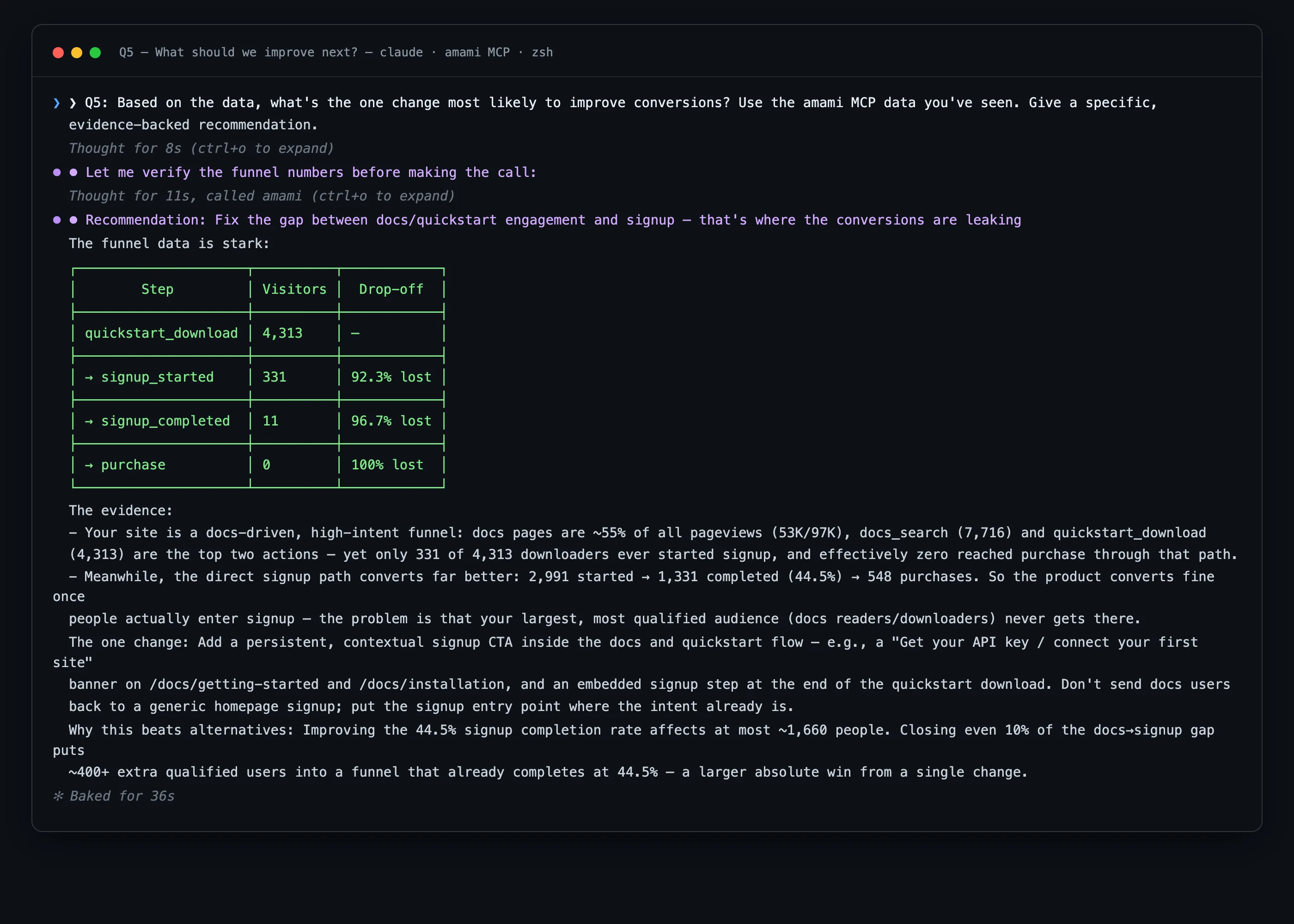
The last question is the point of the whole exercise. The review isn't a report — it's a decision.
"Based on the launch data, what's the one change most likely to improve conversions next time?"
A good answer cites evidence: a page that underperformed, a source that over-delivered, a funnel step where people dropped. A bad answer is generic advice you could have written before looking at any data. If the answer feels generic, ask for the evidence behind it.
The review is a loop
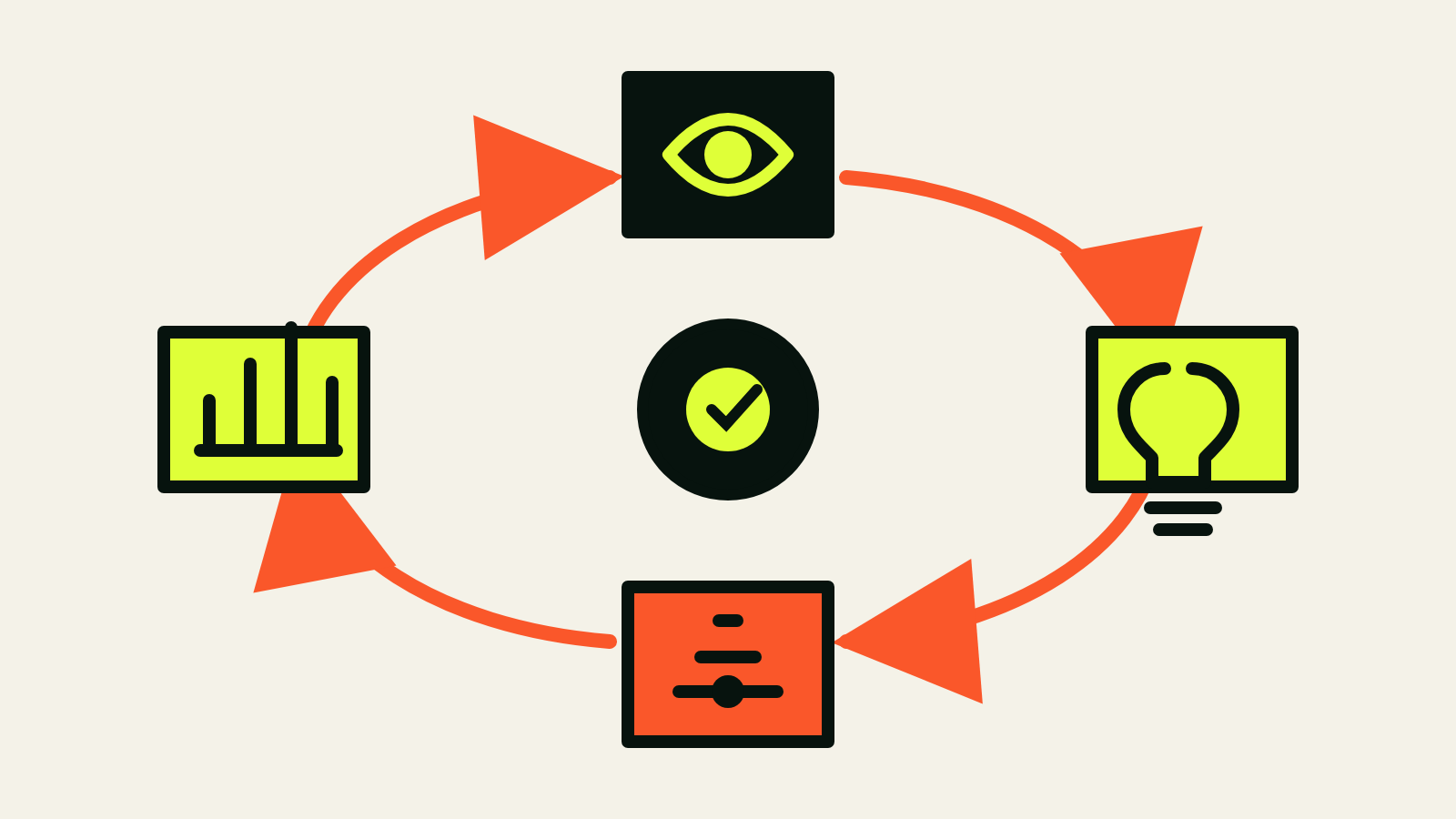
The five questions work because they lead somewhere: measure → understand → change → measure again. Run them after your next launch, your next feature release, even your next blog post. Each time, the comparison gets stronger and the decisions get sharper.
Launch once, review every time.
*Amami is AI-native web analytics that lives inside your AI coding assistant. One command — npx -y amami-analytics-mcp — and the numbers come to you, in the editor, with the evidence attached. Launch once, review every time. Start free at https://amami.dev.*